
AFCON
Odegbami turns a prophet, sees Nigeria – Cote d’Ivoire finale on February 11! –


Nigerian football legend, Segun Odegbami who won the Africa Cup of Nations with the then Green Eagles in 1980 and third placed in 1978 has prophesied that Nigeria and hosts, Cote d’Ivoire will play the Afcon final match on 11 February.
In essence, he sees Nigeria scaling the South African hurdle on Wednesday while Cote d’Ivoire too will defeat DR Congo in the semi-finals.
If the ‘prophesy comes to past, it will be the second time that Nigeria will face a team in its group stage at the final match.
That happened the last time Nigeria won the cup in 2013. The Super Eagles were held to a draw by Burkina Faso and later met in the final match which Nigeria won.
According to a press statement by the NFF, Odegbami addressed the Super Eagles at their Pullman Hotel in Abidjan on the eve of their encounter with Guinea Bissau which was the last group match.
“Some persons who were there did not quite share in his conviction that the Super Eagles would be champions”, remarked Ademola Olajire, the spokesman of the NFF.
“Today, many have been ‘converted’, and the 71-year- old legend says he is happy that things are going according to his expectations, Olajire concluded.
Odegbami.
“I said long before the finals that we would be champions of Africa. Many people thought I was just sounding off. Now, they are seeing their light. Everyone appears to believe now that the Super Eagles can do it”, Odegbami reportedly said.
“Now that we are in the semi-finals, I am seeing that we are going to be playing the host nation, Cote d’Ivoire in the Final. We are beating South Africa and Cote d’Ivoire will beat Democratic Republic of Congo. The stage is set for a classic Final match on February 11.”

By Kunle Solaja.
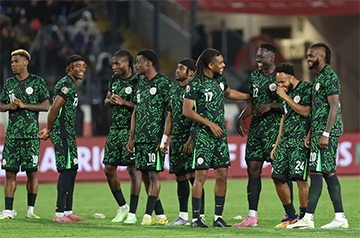
Nigeria’s senior national team, the Super Eagles, will discover their route to the 2027 Africa Cup of Nations when the Confederation of African Football (Confederation of African Football) conducts the qualifying draw on May 19, 2026.
This is an exercise that will define the country’s pathway to the historic PAMOJA 2027 tournament.
The draw, coming after the conclusion of the preliminary round, will feature 48 teams, including co-hosts Kenya, Tanzania and Uganda. They will be pooled into 12 groups of four teams each. Only the top two teams from each group will progress to the final tournament, setting up what promises to be a fiercely competitive qualification series.
For Nigeria, a three-time African champion and podium finisher in three of the last four editions, the qualification format is familiar, but the stakes are evolving. They will need a good head start to avert the type of tragedy that defined their World Cup 2026 qualification campaign.
The Super Eagles have maintained a strong record in AFCON qualifying campaigns in recent years, yet inconsistency at the tournament proper has raised expectations for not just qualification, but a deeper continental impact.
The six-match qualification series will be spread across three FIFA international windows:
- * September–October 2026 (Matchdays 1 & 2)
- * November 2026 (Matchdays 3 & 4)
- * March 2027 (Matchdays 5 & 6)
This staggered schedule will test squad depth, technical stability, and administrative efficiency, which are areas that have historically influenced Nigeria’s performance as much as on-field quality.
East Africa Return and Logistical Implications
The 2027 tournament will mark AFCON’s return to the East African region for the first time since the 1976 Africa Cup of Nations.
For Nigeria, this introduces a different competitive environment—altitude variations, travel logistics across three host nations, and potentially unfamiliar playing conditions.
The tri-nation hosting model also means that teams must prepare for a geographically dispersed tournament, requiring early planning in scouting, acclimatisation, and logistics—areas where Nigeria has previously faced challenges in major competitions.
CAF is banking on the momentum generated by recent tournaments such as the 2023 Africa Cup of Nations and 2025 Africa Cup of Nations, both of which recorded significant commercial growth, increased sponsorship value, and expanded global broadcast audiences.
For Nigeria, one of Africa’s most marketable football brands, this growth presents both opportunity and pressure. Strong performances by the Super Eagles not only boost national pride but also reinforce Nigeria’s commercial relevance in African football’s evolving ecosystem.
While the May 19 draw will simply allocate opponents on paper, its implications run deeper. A favourable group could ease Nigeria’s passage, but recent AFCON qualifiers have shown that traditional hierarchies are narrowing, with emerging teams increasingly competitive.
For the Super Eagles, the road to PAMOJA 2027 is not just about qualification—it is about reasserting continental dominance in an era where African football is becoming more competitive, more commercial, and more globally visible.
The journey begins with the draw, but for Nigeria, expectations will stretch far beyond simply making the trip to East Africa.
Join the Sports Village Square channel on WhatsApp: https://whatsapp.com/channel/0029Vaz7mEIGk1FxU8YIXb0H
By Kunle Solaja.
The Confederation of African Football (Confederation of African Football) has formally unveiled the competition window for the landmark Africa Cup of Nations, tagged PAMOJA 2027, setting the stage for what is shaping up to be one of the most politically and structurally significant tournaments in the competition’s history.
Scheduled to kick off on Saturday, 19 June 2027, with the final fixed for Saturday, 17 July 2027, the tournament marks only the second time the AFCON will be staged in the June–July window. The first was the expanded 24-team edition in the 2019 Africa Cup of Nations, a shift originally designed to align African football with the European off-season calendar and improve player availability.
A Return to June–July: Progress or Persistent Constraint?
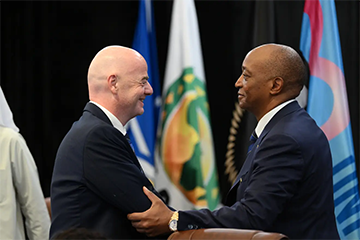
While the timing suggests continuity with the 2019 precedent, it also underscores a deeper tension within African football governance. CAF’s confirmation that the dates required approval from the FIFA Council, following a meeting in Vancouver, raises renewed questions about the confederation’s operational autonomy.
Historically, AFCON scheduling has been vulnerable to external pressures, particularly from European clubs and leagues reluctant to release African players mid-season. The June–July calendar was initially seen as a strategic compromise. However, the necessity of FIFA ratification in 2027 signals that CAF’s flagship tournament still operates within a framework heavily influenced by global football politics.
This development may reignite debate about whether CAF is charting an independent course or increasingly aligning its decisions with FIFA’s broader international calendar priorities.
Beyond scheduling, AFCON 2027 represents a structural leap. For the first time, three nations—Kenya, Tanzania and Uganda—will jointly host the tournament.
This tri-nation model, branded “PAMOJA” (Swahili for togetherness), is more than symbolic. It reflects CAF’s attempt to decentralise hosting rights, reduce infrastructural pressure on single nations, and expand the tournament’s commercial and cultural footprint.
With a projected reach of over 400 million people across East Africa, the tournament offers significant opportunities:
- Market expansion: Opening new commercial corridors in a region historically underrepresented in hosting major football events.
- Infrastructure development: Accelerated investment in stadiums, transport, and tourism across three countries.
- Regional integration: Football as a tool for political and economic cooperation within East Africa.
Yet, the model is not without risks. Multi-country hosting introduces logistical complexities—border coordination, security harmonisation, and infrastructure parity—that CAF has not previously managed at this scale.
Waiting for Key Decisions
CAF has deferred the announcement of which cities or countries will host the opening match and final, decisions that will carry both symbolic and economic weight. These choices could influence regional balance and perceptions of equity among the co-hosts.
AFCON 2027 sits at the intersection of ambition and dependency. On one hand, it embodies innovation—a new hosting model and a reaffirmed global calendar alignment. On the other, it highlights lingering structural challenges, particularly CAF’s reliance on FIFA’s approval mechanisms.
As preparations unfold, the success of PAMOJA 2027 will likely be judged not just by the quality of football on display, but by how effectively CAF navigates these competing forces—continental aspiration versus global integration.
In many ways, AFCON 2027 will be a test of whether African football can expand its horizons without compromising its independence.
Join the Sports Village Square channel on WhatsApp: https://whatsapp.com/channel/0029Vaz7mEIGk1FxU8YIXb0H
By Kunle Solaja.
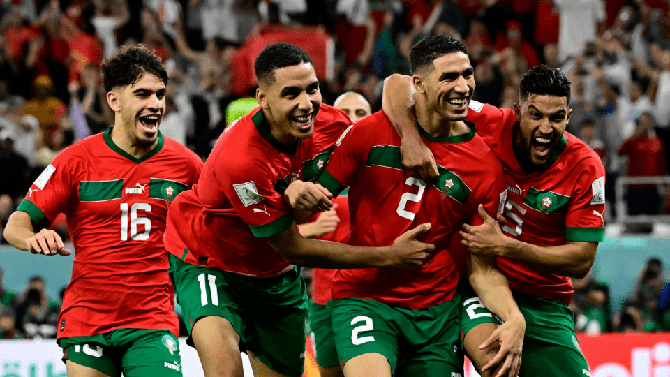
Defending champions Morocco will take the first formal step in their title defence when the Confederation of African Football (CAF) conducts the draw for the AFCON PAMOJA 2027 qualifiers on May 19, 2026, two days before the 122nd anniversary of the founding of FIFA.
Fresh from their triumph at the 2025 Africa Cup of Nations, the Atlas Lions now face the challenge of sustaining continental dominance as they begin the journey toward the historic East African finals, to be co-hosted by Kenya, Tanzania and Uganda.
As reigning champions, Morocco enter the qualifiers with a target on their back. Their recent rise, bolstered by strong World Cup performances and a deep pool of Europe-based talents, has elevated expectations both at home and across the continent.
But history suggests that defending an AFCON title is rarely straightforward. The qualifying format, which includes 48 teams drawn into 12 groups of four, leaves little margin for complacency. Only the top two teams in each group will progress, meaning even established powers must navigate a potentially tricky six-match campaign.
The qualifiers will unfold across three FIFA international windows:
- * September–October 2026 (Matchdays 1 & 2)
- * November 2026 (Matchdays 3 & 4)
- * March 2027 (Matchdays 5 & 6)
For Morocco, maintaining squad cohesion across these windows will be crucial. With players spread across Europe’s top leagues, managing fatigue, travel, and club-country balance will test the technical crew’s planning and depth.
AFCON 2027 will mark the tournament’s return to East Africa for the first time since the 1976 Africa Cup of Nations. The unique three-country hosting model introduces new logistical variables—ranging from climate and altitude differences to travel across multiple venues.
For Morocco, whose recent success has been built on tactical discipline and structured preparation, early adaptation to these conditions could prove decisive in their title defence.
CAF’s recent tournaments—including the 2023 Africa Cup of Nations and Morocco 2025—have recorded unprecedented commercial success, expanding the global reach of African football.
As defending champions, Morocco stand at the centre of this growth. Their performances will not only shape the competitive narrative of AFCON 2027 but also influence the tournament’s commercial appeal and global visibility.
While the May 19 draw will determine Morocco’s immediate opponents, the broader mission is clear: retain continental supremacy in an increasingly competitive African football landscape.
For the Atlas Lions, the road to PAMOJA 2027 is not merely about securing qualification—it is about proving that their recent triumph was not a peak, but the beginning of sustained dominance.
Join the Sports Village Square channel on WhatsApp: https://whatsapp.com/channel/0029Vaz7mEIGk1FxU8YIXb0H


FIFA Plans Three Opening Ceremonies in All Host Nations for 2026 World Cup

FIFA to Mark America’s 250th Anniversary During 2026 World Cup

Nigeria’s Burna Boy, Shakira Lead Expanding Musical Build-Up to 2026 World Cup
Breaking! Uzoho suspended from Super Eagles’ next match with Sierra Leone
No longer Super League as CAF changes name of its new clubs competition
NIGERIAN FOOTBALL CHIEF EXECUTIVE, SANUSI CHARGES NIGERIAN COACHES TO BE UPRIGHT, DILIGENT
-

 Boxing6 days ago
Usyk backs Joshua to beat Fury ahead of heavyweight showdown
-

 Olympics1 week ago
Super Falcons Draw Bye, Set to Face South Sudan or Comoros in LA 2028 Olympic Qualifiers
-

 Governing Bodies1 week ago
CAF, UEFA Renew Alliance 29 Years After Meridian Cup Pact
-

 World Cup1 week ago
Iranian Football Delegation Turned Back at Toronto Airport, Miss FIFA Congress
-

 World Cup11 hours ago
Burna Boy Joins Shakira for Official 2026 World Cup Song ‘Dai Dai’
-

 World Cup1 week ago
‘They are not representing Iran’: protesters urge FIFA to ban Iran from World Cup
-

 World Cup3 days ago
Despite 2026 Absence, Nigeria Still Leads Africa’s World Cup Winners’ Chart
-

 Governing Bodies1 week ago
Rabat Wins Global Spotlight as Morocco Lands FIFA’s 77th Elective Congress