
CELEBRITY
Video: How Budweiser Game of King ambassador Roberto Carlos shocked the world with famous free kick


On June 3, 1997, Roberto Carlos stunned the world with one of the most spectacular free kicks in football history.
The left-back scored the most famous goal of his career: an outrageous long-range free kick for Brazil in a 1-1 draw against France in the opening game of the 1997 Tournoi de France, a warm-up tournament ahead of the following year’s World Cup.
The strike left goalkeeper Fabien Barthez perplexed, as the ball apparently was heading well wide off the target and into the crowd.
However, it swerved back, glanced the inside edge of the post, and stopped only when it hit the net. Two decades later, Roberto Carlos says he is still impressed when he sees footage of his kick.
“To be honest, until this day I don’t know how I did that,” he told ESPN Brasil in 2017.
“It was a beautiful goal. It required a lot of training and hard work throughout my career.
“But that hard work paid off, as I was able to score such a wonderful goal, which was a special moment for me.”
When he scored that famous goal, the left-back was just starting his career.
He was in his second season for Real Madrid, and came to Spain after a short term at Inter Milan, who bought the young player from Brazilian champions Palmeiras for $8 million — a fortune in 1995.
In Madrid, he would win title after title, becoming an idol and a legend; his is still an international ambassador for Los Merengues.
While his star rose in the Spanish capital, he became Brazil’s starting left-back in the 1998, 2002 and 2006 World Cups. He won in South Korea/Japan in 2002 having been a runner-up in France four years earlier.
Roberto Carlos continued playing until 2015, when he retired after a short stint with Delhi Dynamos of the Indian Super League.
Throughout the 18 years that passed between his famous free kick against France and his retirement, Roberto Carlos never tried to strike the ball in the same way, as he knew it was practically impossible to repeat such perfection.
“I never tried to kick like that again, because I know I would never have scored,” he says with a laugh.
“There are lots of good kickers nowadays. It might take some time, but someday someone will score a similar goal. But I was the first.”
Roberto Carlos did recreate the kick (on a much smaller scale) in an Instagram post that went viral in 2019. Science, however, is not so sure that such a goal will be repeated in a match…
The impossible kick?
Roberto Carlos’ goal defied physics and still impresses scientists today.
When the famous free kick happened, physicists from all around the world were baffled by the images.
That goal was the catalyst for lots of studies and analysis about aerodynamics and the ball’s curve that day at the Stade de Gerland in Lyon.
One of the most famous studies was conducted by four French scientists — Guillaume Dupeux, Anne Le Goff, David Quere and Christophe Clanet — and published in the New Journal of Physics in September 2010.
In this study, the physicists conduct a series of experiments and analyses, which result in an equation that explains the ball’s trajectory and all the forces that were in action at that precise moment.
“The case of soccer, where ℒ is twice as small as L, is worth commenting on. The ball trajectory can deviate significantly from a circle, provided that the shot is long enough. Then the trajectory becomes surprising and somehow unpredictable for a goalkeeper,” they wrote.
“This is the way we interpret a famous goal by the Brazilian player Roberto Carlos against France in 1997.
This free kick was shot from a distance of approximately 35 metres, that is, comparable to the distance for which we expect this kind of unexpected trajectory.
Provided that the shot is powerful enough, another characteristic of Roberto Carlos’ abilities, the ball trajectory brutally bends towards the net, at a velocity still large enough to surprise the keeper.”
Dupeux, Le Goff, Quere and Clanet conclude that if the correct calculations were made, and the distances and forces were repeated, the famous goal could be replicated by another player.
This, however, is impossible, in the opinion of one of Brazil’s most important physicists. He describes Roberto Carlos’ masterpiece as a “football miracle”.
“Although physics explain perfectly the ball’s trajectory, the conditions in that moment, such as the power of the kick, the point of impact of Roberto Carlos’ foot on the ball, and the distance to the goal, were so rare that we can call that a miracle,” says professor Luis Fernando Fontanari of Sao Roberto Carlos Physics Institute, a branch of the University of Sao Paulo — the most respected university in the country.
Fontanari is one of the editors of “Physics of Life Reviews” and “Theory in Biosciences,” two of the most important scientific journals in the world.
He adds that, if the ball hadn’t stopped in the net, it would have continued in the air, drawing an incredible spiral trajectory, as the image above shows.
“I don’t believe that we will see something like that happening again,” Fontanari said.
Israeli scientist Erez Garty also theorised about Roberto Carlos’ kick. In a YouTube video, he gave a lesson for “physics dummies,” which explains the magic.
-ESPN

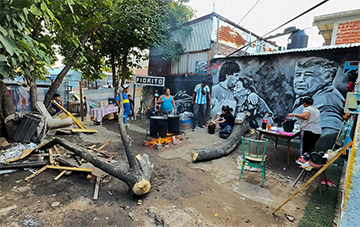
Every week, hundreds of people line up to fill a plastic container with food in an unlikely place: the humble home where Argentine soccer legend Diego Armando Maradona was born.
The house in Villa Fiorito, a poor neighbourhood on the outskirts of Buenos Aires, no longer belongs to the family of Maradona, who died in 2020 after a heart attack. Still, for the last month, its current owner has lent its dirt yard to a group of volunteers who light a grill and cook for neighbours.
Last Thursday, Maria Torres stirred a stew in two large pots while several others peeled potatoes and chopped pieces of chicken. A mural painted on the house’s facade depicts the soccer player next to the words, “The house of god.”

A man cooks stew for residents of the working-class neighbourhood of Villa Fiorito at a soup kitchen set up in the house where late soccer legend Diego Armando Maradona spent his early childhood, on the outskirts of Buenos Aires, Argentina, March 26, 2026. Picture taken with a mobile phone. REUTERS/Miguel Lo Bianco
Poverty has been trending downward in Argentina, with official statistics released on Tuesday showing it dropping to 28.2% of the country’s population in the second half of 2025 from 52.9% in the first half of 2024, when President Javier Milei sharply devalued the peso and inflation spiked.
While there has been a “very important drop” in poverty, Argentina needs to see more GDP growth in labour-intensive sectors, such as mining, as opposed to capital-intensive sectors, such as agriculture, said Eduardo Donza, a sociologist at the Catholic University of Argentina.

Volunteers chop chicken before cooking a stew for residents of the working-class neighbourhood of Villa Fiorito at a soup kitchen set up in the house where late soccer legend Diego Armando Maradona spent his early childhood, on the outskirts of Buenos Aires, Argentina, March 26, 2026. Picture taken with a mobile phone. REUTERS/Miguel Lo Bianco
The drop in the poverty rate has followed a substantial drop in monthly inflation, from double digits when Milei took office to 2.9% in February.

A man cooks stew for residents of the working-class neighbourhood of Villa Fiorito at a soup kitchen set up in the house where late soccer legend Diego Armando Maradona spent his early childhood, on the outskirts of Buenos Aires, Argentina, March 26, 2026. Picture taken with a mobile phone. REUTERS/Miguel Lo Bianco
However, Milei’s austerity measures have sharply diminished the public sector workforce, and many say they have lost purchasing power as the government has cut transportation and energy subsidies.

Volunteers chop chicken before cooking a stew for residents of the working-class neighbourhood of Villa Fiorito at a soup kitchen set up in the house where late soccer legend Diego Armando Maradona spent his early childhood, on the outskirts of Buenos Aires, Argentina, March 26, 2026. Picture taken with a mobile phone. REUTERS/Miguel Lo Bianco
Leonardo Fabian Alvarez, a pastor who runs the makeshift soup kitchen, said he has seen the demand for food in Villa Fiorito and other neighbourhoods grow as small factories have closed. Deregulation and a stronger peso have led to cheaper imports under Milei.
“People obviously lost their jobs,” he said, adding that “they come to the line, pick up food, take what we give them.”
Argentina declared the home of Maradona a National Historic Site in 2021.
-Reuters
Join the Sports Village Square channel on WhatsApp: https://whatsapp.com/channel/0029Vaz7mEIGk1FxU8YIXb0H
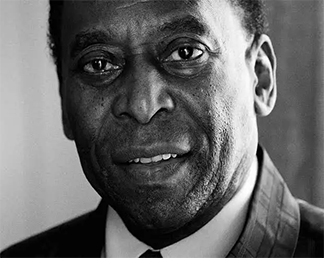
The legacy of Brazilian football legend Pelé has taken a new turn after Neymar Santos Sr, father of Brazil star Neymar Jr, confirmed the acquisition of the commercial rights to Pelé’s name and image through his agency, NR Sports.
Speaking at the Pelé Museum in Santos, Brazil, Neymar Sr said the deal marks a new chapter for one of the most iconic brands in global sport.
“We are proud. I think it’s a very strong brand. We want to strengthen its identity and adapt it to the current era,” he said, describing the project as deeply emotional and nationally significant.
Although financial details were not officially disclosed, Brazilian media estimate the acquisition at around $18 million. The rights had previously belonged to US-based company Sport 10, which many in Brazil accused of underdeveloping a national treasure.
A ‘Repatriation’ of Pelé’s Legacy
NR Sports described the agreement as a “repatriation” of Pelé’s brand—bringing back to Brazil “one of the greatest symbols in the history of world sport.”
Pelé’s daughter, Flavia, attended the announcement and welcomed the move, saying the family had tried—and failed—to reacquire the rights after Pelé’s death in 2022.
“There are no words to describe the emotion of bringing back a brand that embodies soul, humanity, and love. It’s priceless,” she told AFP.
The unveiling was accompanied by an emotional tribute at the Pelé Museum, which erected a massive green screen with Pelé’s iconic logo. A video shared on Pelé’s and NR Sports’ official accounts celebrated the “universal language” of Brazilian football, showing some of the King’s most memorable goals from his World Cup triumphs in 1958, 1962, and 1970.
Neymar Jr: ‘Pelé Was Born to Change Everything’
Neymar Jr, who recently returned to Pelé’s former club Santos and has surpassed the King as Brazil’s all-time top scorer, featured in a promotional video congratulating his father’s company.
“Some are born to play, others are born to change the game. Pelé was born to change everything,” the 33-year-old forward said. “Pelé never stopped being one of us, and now he is officially part of Brazil, again and forever.”
A New Era for an Underused Global Brand
For years, Pelé’s image rights were more prominently exploited abroad than at home—a situation that drew criticism from the family and Brazilian football circles. The new deal is expected to revitalise the Pelé brand through modern marketing, partnerships, and heritage initiatives anchored in Brazil.
“This is the beginning of a motivating project for us. We are very moved,” Neymar Sr added.
Pelé, who died in December 2022 at age 82, remains an enduring symbol in Santos, São Paulo state, where he played from 1956 to 1974 and where thousands still visit his mausoleum.
With the rights now back in Brazilian hands, NR Sports says the goal is clear: preserve, expand, and enrich the legacy of the King of Football for generations to come.
Join the Sports Village Square channel on WhatsApp: https://whatsapp.com/channel/0029Vaz7mEIGk1FxU8YIXb0H
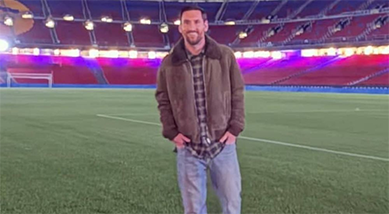
Lionel Messi expressed his wish to one day return to Barcelona’s Camp Nou on Monday, having made a brief visit to see the newly revamped stadium where he spent 21 years of his illustrious career.
The 38-year-old Argentine World Cup winner, who joined Barca’s youth academy at age 13 and went on to become the club’s all-time top scorer with 672 goals in 778 appearances, left the Catalan side in 2021 when they could not make it financially viable to keep him.
Having won 10 LaLiga titles, four Champions League crowns and three Club World Cups with Barca, Messi now plays for Inter Miami after two years with Paris St Germain.
Barca reopened the Camp Nou on Friday, 895 days after its closure, unveiling a revamped stadium by staging an open training session attended by 21,795 fans.
“Last night, I returned to a place that I miss with all my heart. A place where I was immensely happy, where you made me feel a thousand times like the happiest person in the world,” the eight-times Ballon d’Or winner wrote on Instagram on Monday.
“I hope that one day I can return, and not just to say goodbye as a player, as I never got to do.”
Messi extended his contract with Inter Miami in October, and has previously said that the Major League Soccer club would likely be his last.
“You’re always welcome at your home, Leo,” Barca posted on X.
-Reuters
Join the Sports Village Square channel on WhatsApp: https://whatsapp.com/channel/0029Vaz7mEIGk1FxU8YIXb0H


Manager, Gattuso leaves Italy job after missing out on World Cup again

Arteta keeps cards close to chest as injury-hit Arsenal eye FA Cup semis

Guardiola eyes record eighth straight FA Cup semi-final for Man City
Breaking! Uzoho suspended from Super Eagles’ next match with Sierra Leone
No longer Super League as CAF changes name of its new clubs competition
AIU releases its report on Tobi Amusan
-

 World Cup1 week ago
World Cup Fans, Players And Officials Face $15,000 Visa Bonds to Enter U.S.
-

 AFCON5 days ago
AFCON to Expand to 28 Teams as CAF Unveils New Competition Calendar
-

 World Cup3 days ago
Infantino promises FIFA backing for Iran to play at World Cup
-

 World Cup1 week ago
Jamaica Edge New Caledonia to Set Up Decisive World Cup Showdown with DR Congo
-

 AFCON6 days ago
CAF May Sanction Senegal Over AFCON Trophy Parade
-

 Governing Bodies6 days ago
BREAKING! Nigeria’s Samson Adamu Appointed Acting CAF General Secretary
-

 Table Tennis5 days ago
Aruna Faces Tough Draw as Africa Targets Glory at ITTF World Cup in Macao
-

 World Cup1 week ago
New Zealand players willing to play World Cup opener against Iran outside the US