Governing Bodies
NOW, ITS A NEW YEAR NATIONAL SPORTS FESTIVAL


For the first time ever, the National Sports Festival in Nigeria will hold during the New Year festivities as the Ministry of Sports has announced that the Presidential Task Force on Covid-19 has approved the sports fiesta to hold from 3 to 17 January in 2021.
It was originally slated to hold in March 2020 but force majeure occasioned by the global outbreak of the coronavirus made it to be postponed indefinitely. Then a December 2020 date was settled for. That was again cancelled for the new date now announced.
The new date is almost coinciding with the anniversary of the 2nd All Africa Games which Nigeria hosted from 3-18 January in 1973.
According to a press release signed by Gabriel T. Aduda, the Permanent Secretary of the ministry of sports, the new date was arrived at during a virtual a meeting on Thursday, convened by the sports minister, Sunday Dare.
At the meeting, the circumstances around the recent rescheduling of the sports fiesta, was reviewed.
The new date is to allow the Presidential Task Force, Nigeria Centre for Disease Control (NCDC), Edo State Government and the Federal Ministry of Youth and Sports Development to complete the necessary steps and processes, as assigned, to ensure a hitch free festival and deployment of rapid diagnostic test kits for over 11,000 athletes.
The virtual meeting had in attendance the Minister of Youth and Sports Development, Permanent Secretary Ministry of Youth and Sports Development, PTF National Coordinator – Dr. Sani Aliyu, PTF’s Deputy National Incident Manager/ Head of Operations – Dr Assad Hassan, Representatives of NCDC, amongst others.

World football governing body, FIFA, today clocks its 122nd anniversary, celebrating more than a century of overseeing and expanding the global game.
Founded on May 21, 1904, in Paris, France, FIFA began with just seven member associations — France, Belgium, Denmark, the Netherlands, Spain, Sweden, and Switzerland.
From that modest beginning, the organisation has grown into the most influential sports governing body in the world, with 211 member associations spread across all continents.
Over the decades, FIFA has transformed football into a truly global phenomenon through competitions such as the FIFA World Cup, Women’s World Cup, Club World Cup, youth tournaments, and developmental programmes aimed at growing the game worldwide.
The organisation has also witnessed remarkable milestones, including the expansion of the men’s World Cup from 13 teams in 1930 to 48 teams beginning from the 2026 edition to be jointly hosted by the United States, Canada, and Mexico.
FIFA’s journey has equally reflected football’s growing influence beyond sport, with the game becoming a major tool for diplomacy, social inclusion, youth empowerment, and economic development across the world.
As FIFA celebrates 122 years of existence, attention is now focused on the future of the game, technological innovations, expanded competitions, women’s football growth, and the continued globalisation of football.
Visit the Sports Village Square Channel:
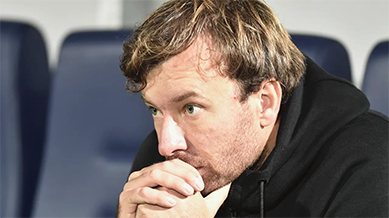
UEFA has issued a lifetime ban to Petr Vlachovsky, a Czech women’s soccer coach who secretly filmed his players, the governing body announced on Tuesday.
Czech media reported that the coach was convicted in May 2025 and initially received a suspended one-year prison sentence and a five-year domestic coaching ban for filming FC Slovacko’s players in changing rooms, the youngest of whom was 17.
In a statement, UEFA’s Control, Ethics and Disciplinary Body (CEDB) said it had decided to ban Vlachovsky “from exercising any football-related activity for life” following the appointment of an Ethics and Disciplinary Inspector to investigate allegations of potential misconduct.
“The CEDB further decided to request FIFA to extend the abovementioned ban on a worldwide level and to order the Football Association of the Czech Republic to revoke Mr Petr Vlachovsky’s coaching licence,” the statement added.
FC Slovacko did not immediately respond to an emailed request for comment.
Football players’ union FIFPRO welcomed the ban as well as UEFA’s request for world soccer governing body FIFA to impose an international ban on Vlachovsky.
“This outcome sends a strong and necessary message that abusive and inappropriate behaviour has no place in football and that safeguarding the well-being of players must remain a priority at every level of the game,” FIFPRO added in a statement.
Vlachovsky had also previously served as coach of the Czech women’s Under-19s team.
RELATED STORY: https://sportsvillagesquare.com/2026/04/08/outrage-as-male-coach-who-secretly-filmed-women-players-still-free-to-work-in-football/
-Reuters
Visit the Sports Village Square Channel:
https://www.whatsapp.com/channel/0029Vaz7mEIGk1FxU8YIXb0H
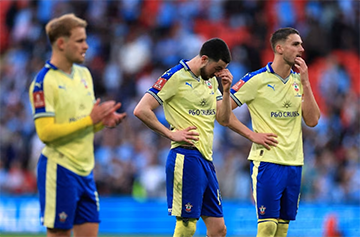
Southampton have been kicked out of the Championship playoff final after being found guilty of spying on semi-final opponents Middlesbrough, the English Football League said on Tuesday.
Middlesbrough, who lost 2-1 to Southampton on aggregate in the semi, have been reinstated and will face Hull City on Saturday in what is dubbed the world’s richest soccer match.
Promotion to the Premier League, even with an immediate relegation, is estimated to be worth in the region of 200 million pounds ($268.10 million) over three seasons.
Southampton, who admitted the charges, were also found guilty of filming training sessions involving Oxford United in December and Ipswich Town in April during the regular season.
They have also been deducted four points from the start of next season in England’s second tier.
“An Independent Disciplinary Commission has today expelled Southampton from the Championship play-offs after the club admitted multiple breaches of EFL regulations related to the unauthorised filming of other clubs’ training,” the EFL said.
“Southampton admitted breaches of Regulations requiring Clubs to act with the utmost good faith and prohibiting the observation of another Club’s training session within 72 hours of a scheduled match.
“The effect of today’s order is that Middlesbrough are reinstated into the 2026 play-offs and will proceed to the play-off final against Hull City. The final remains scheduled for Saturday 23 May, with the kick-off time to be confirmed.”
The EFL confirmed that Southampton could appeal against the decision and that “parties are working to try and resolve any appeal on Wednesday 20 May.
“Subject to the outcome, it could result in a further change to Saturday’s fixture,” the statement said.
‘BORO CALLED FOR SOUTHAMPTON EXPULSION
Middlesbrough had called for Southampton’s expulsion after having a training session at their Rockliffe Park site filmed 48 hours ahead of the first leg of their playoff semi-final with Southampton which ended 0-0.
The north-east club said they welcomed the decision.
“We believe this sends out a clear message for the future of our game regarding sporting integrity and conduct,” the north Middlesbrough said in a statement.
“As a club, we are now focused on our game against Hull City at Wembley on Saturday.”
Southampton were relegated from the Premier League last season and were struggling in the early part of this campaign until a storming finish in which they went unbeaten in 19 league games to finish fourth and enter the playoffs.
The south-coast club are the first to fall foul of the Football League’s regulation 127 — brought in after Leeds United were found guilty of spying on Derby County seven years ago, an offence for which they were fined 200,000 pounds.
-Reuters


Infantino accuses World Cup critics of spreading hate in open letter

WAFCON 2026: Côte d’Ivoire Return After 12 Years, Face Burkina Faso in Casablanca

Rising star Rita Ferdinand breaks world record on Commonwealth Games’ Day 1
Breaking! Uzoho suspended from Super Eagles’ next match with Sierra Leone
NIGERIAN FOOTBALL CHIEF EXECUTIVE, SANUSI CHARGES NIGERIAN COACHES TO BE UPRIGHT, DILIGENT
No longer Super League as CAF changes name of its new clubs competition
-

 World Cup6 days ago
How a 64-team World Cup could transform soccer’s economics
-

 World Cup1 week ago
Reuters: 10 Key Takeaways from the 2026 FIFA World Cup
-

 World Cup1 week ago
The economic goal that never came: World Cup falls short of boosting Mexico
-

 World Cup1 week ago
FIFA Salutes Kunle Solaja as Historic World Cup 2026 Draws to a Close
-

 Boxing2 days ago
BREAKING: FROM THE CANVAS TO CHAOS! Joshua destroys Prenga after two knockdowns
-

 AFCON3 days ago
CAS to hear Senegal’s appeal against African Cup of Nations title removal on October 8
-

 World Cup1 week ago
Mbappe Becomes World Cup’s All-Time Leading Scorer with 22 Goals
-

 Commonwealth Games3 days ago
King Charles, Queen Camilla make TARDIS entrance as Glasgow 2026 Commonwealth Games open in spectacular style