
International Football
WORLD CUP 2014 STADIUMS BECOME HOME TO CORONAVIRUS VICTIMS

The costly football stadiums Brazil built and refurbished in the run-up to the 2014 World Cup are finding new life as health centres for patients with coronavirus.
Local governments have started signing agreements to use the stadiums – once destined for star-studded matches – as makeshift hospitals and vaccine centres to help deal with an expected surge of Covid-19 cases.
With football in the country suspended until further notice, more than half the clubs in Brazil’s Serie A have given up their stadiums as authorities in densely populated Sao Paulo and Rio de Janeiro seek to expand hospital capacity to deal with the crisis.
Current South American champions Flamengo are giving control of their famous Maracana stadium in Rio de Janeiro to health authorities, said club president Rodolfo Landim.
“In this grim moment, I wanted to invite our great Red and Black nation to renew hope and work for better days. Let us take care of our elders, help those who need it most,” he wrote in a message to supporters.
Authorities in Sao Paulo – Brazil’s biggest city – said they would install 200 beds in a field hospital at the Pacaembu municipal stadium to relieve pressure on the city’s hospitals. Work is already underway at the venue – where football legend Pele played hundreds of matches for Santos FC – while two of the city’s big clubs were also lending a hand.
Santos announced that a temporary clinic would be set up in one of the lounges inside its Vila Belmiro stadium.
Corinthians said they have made their Itaquerao stadium and their training headquarters available “so that the authorities can evaluate how they can be used to combat the spread of the disease”.
On March 23, Allianz Parque, home of the Palmeiras football club in Sao Paulo, a line of people snaked around the outside of the stadium as if a match were about to start. But these were not football fans – they were high-risk Brazilians spaced 3m apart and there to get flu shots.
For Brazilians, it is a useful transformation of structures dubbed “white elephants” that later became symbols of corruption in Latin America’s largest economy.
Back in 2014, the idea of Brazil spending US$11 billion (S$15.7 billion) to host the World Cup was a contentious one, with locals and foreigners alike arguing that a nation struggling to provide basic health care, education and even sewage has no right diverting resources to a football championship.
As construction began, the staggering price tag for the stadiums fuelled a frenzy of protests. One common chant: “We want hospitals with Fifa standards!”
In neighbouring Argentina, six major clubs including Buenos Aires’ Boca Juniors and River Plate have also opened their gates should officials need the space.
Brazil currently has over 4,000 confirmed infections and deaths top 100.
A week ago, Health Minister Luiz Henrique Mandetta had predicted the virus would reach its peak in the country between April and June, anticipating a drop in Covid-19 infections from September.
Mandetta warned the health system in the country of 210 million people could reach saturation by the end of April.
–AFP


French soccer icon Zinedine Zidane has agreed to take over his national team’s head coaching duties following this summer’s FIFA World Cup, ESPN reported Monday.
Zidane, 53, reportedly reached a verbal agreement with the Federation Francaise de Football to replace Didier Deschamps, who has held the role since 2012.
Zidane, who managed La Liga powerhouse Real Madrid for two stints (2016-18, 2019-21), has long been expected to eventually become the skipper for France.
As a player, the dynamic midfielder won the 1998 Ballon d’Or and was a three-time FIFA World Player of the Year (1998, 2000 and 2003). He helped France win the World Cup in 1998 and finish second in 2006. He was infamously sent off during the final of the 2006 World Cup when he headbutted Italy’s Marco Materazzi in the chest.
-Reuters
Join the Sports Village Square channel on WhatsApp: https://whatsapp.com/channel/0029Vaz7mEIGk1FxU8YIXb0H
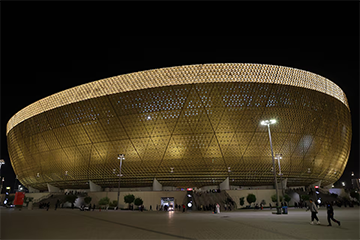
The ‘Finalissima’ match between Spain and Argentina that was scheduled to be held in Qatar has been cancelled due to the conflict in the Middle East, while the South American side rejected multiple alternatives, UEFA said on Sunday.
The U.S.-Israeli strikes on Iran have affected countries throughout the Gulf, disrupting travel in some of the world’s busiest transit hubs and forcing several sporting events to be cancelled due to safety concerns.
The contest between European champions Spain and Copa America winners Argentina was scheduled for March 27 at Doha’s Lusail Stadium, where fans would have had the opportunity to watch Lionel Messi go head-to-head with Lamine Yamal.
UEFA said they held discussions with the organising authorities in Qatar and concluded that the match could not take place due to the “current political situation” in the region.
“It is a source of great disappointment to UEFA and the organisers that circumstances and timing have denied the teams of the chance to compete for this prestigious prize in Qatar,” UEFA said in a statement.
Qatar’s Local Organising Committee said airspace disruption and travel restrictions led to the cancellation of its Qatar Football Festival, where the host country, Egypt, Saudi Arabia and Serbia were also set to play friendly games this month.
The Football Association of Serbia later announced they would play away in Spain on March 27 and host Saudi Arabia four days later.
OTHER ALTERNATIVES REJECTED BY ARGENTINA
The Finalissima’s cancellation was not just about Qatar’s security concerns, however, with UEFA saying they explored other feasible alternatives, but they proved to be ‘unacceptable’ to the Argentinian Football Association (AFA).
UEFA first offered to stage the match at the Santiago Bernabeu in Madrid with a 50:50 split of supporters in the stadium.
A second option was to stage the Finalissima over two legs — at the Bernabeu on March 27 and the second leg in Buenos Aires during an international window before the next Euros and Copa America in 2028.
However, the AFA rejected both options. UEFA said Argentina made a counter offer to play the game after the World Cup but Spain had no available dates.
“Ultimately, UEFA sought a commitment from Argentina that, if a neutral venue in Europe could be found, the game could go ahead on 27 March… or on the alternative date of 30 March. This proposal was also rejected,” UEFA added.
SPAIN WERE READY TO PLAY
The Spanish football federation (RFEF) said they had offered Argentina “all possible options” in collaboration with UEFA to ensure the match went ahead, adding that they had the organisational capacity to stage the clash on short notice.
“From the very outset, the Federation has expressed its absolute commitment to ensuring this match goes ahead, as it believes it brings prestige and international reputation at a crucial time in a World Cup year,” the RFEF said.
“Furthermore, it has worked tirelessly to achieve this. Spain was prepared to play, as has always been stated.”
The 2026 World Cup in the United States, Mexico and Canada kicks off on June 11.
The 2022 edition of the Finalissima was held at Wembley Stadium in London where Argentina beat Italy 3-0.
-Reuters
Join the Sports Village Square channel on WhatsApp: https://whatsapp.com/channel/0029Vaz7mEIGk1FxU8YIXb0H
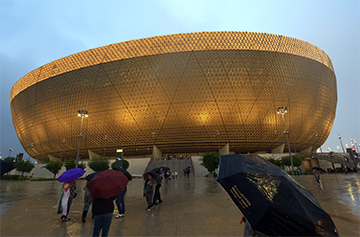
Soccer chiefs from Europe and South America will hold a final meeting before a Thursday deadline to decide whether and where this month’s “Finalissima” between Spain and Argentina will be played, with London emerging as the leading candidate after doubts over Doha, multiple sources told Reuters on Tuesday.
The match between European champions Spain and Copa America holders Argentina had been scheduled for March 27 at Lusail Stadium in Doha.
However, it has become increasingly unlikely that Qatar will host the fixture after the Qatar Football Association suspended soccer tournaments indefinitely following U.S. and Israeli attacks on Iran and retaliatory missiles fired at the Arabian Peninsula.
The Spanish FA (RFEF) has been pushing for a swift resolution, mindful that the March international break is viewed as vital preparation ahead of the June-July World Cup in North America.
“I know that negotiations are underway,” Spain coach Luis de la Fuente told Spanish Public Radio (RNE) on Monday. “The first thing, as a society, is to stop the conflict, but once you are immersed in it and you don’t know how long it will last, the solution would be, as long as you can’t play there, to find another venue as soon as possible.
Wembley Stadium staged the previous edition in 2022, when Argentina beat Italy, but it is set to host England v Uruguay on March 27. London, however, has other stadiums capable of staging the showpiece, leaving the English capital as the most likely alternative should Doha be ruled out, sources confirmed.
ALTERNATIVE OPPONENTS CONSIDERED
While keen to face Argentina and high-profile players such as Lionel Messi, sources told Reuters that Spain had made clear their priority was not to waste the last window of international fixtures before the World Cup and they were already contemplating alternative opponents.
With Spain also due to face Egypt three days later, any change would require agreement between the RFEF and European soccer body UEFA, South American confederation CONMEBOL, global governing body FIFA and the Argentine FA (AFA).
The RFEF, AFA and UEFA did not immediately respond to Reuters requests for comment.
A spokesperson for South American confederation CONMEBOL told Reuters that several meetings between the parties had taken place in recent days but did not confirm Thursday’s deadline or London as the preferred venue.
Madrid was initially proposed by the RFEF but rejected by the AFA, who preferred a neutral venue rather than giving Spain home advantage.
Morocco offered to stage the game, but the RFEF was unwilling to back their Mediterranean neighbours amid tensions behind the scenes over the 2030 World Cup, which Spain, Morocco and Portugal will co-host. Both Spain and Morocco are campaigning to stage the final.
Miami was also considered, with Messi based there at Inter Miami, but Hard Rock Stadium is hosting the Miami Open tennis tournament at the same time.
-Reuters
Join the Sports Village Square channel on WhatsApp: https://whatsapp.com/channel/0029Vaz7mEIGk1FxU8YIXb0H


Italy risk third straight World Cup absence as 2006 winners lament two‑decade decline

Execution of Iranian Wrestler Sparks Global Outcry and Renewed Criticism

Salah Confirms Liverpool Exit in Emotional Farewell Message
Breaking! Uzoho suspended from Super Eagles’ next match with Sierra Leone
No longer Super League as CAF changes name of its new clubs competition
AIU releases its report on Tobi Amusan
-

 World Cup1 week ago
EXCLUSIVE! Late Filing, Unpaid Fee Doom Nigeria’s Protest Against DR Congo
-

 World Cup1 week ago
FIFA Disciplinary Hammer Falls on Nigeria and DR Congo
-

 World Cup3 days ago
FIFA Cancels Thousands of Hotel Rooms in World Cup Host Cities Amid U.S. Immigration Concerns
-

 AFCON1 week ago
Morocco Awarded AFCON 2025 Title as CAF Appeal Board Sanctions Senegal
-

 CAF Champions League2 days ago
Ten-man Zamalek hold on in dramatic Otoho clash to reach semi-finals
-

 MLS6 days ago
Messi scores 900th career goal, joins Ronaldo in elite club
-
World Cup1 day ago
Absent Giants: Big Football Nations Missing from the 2026 World Cup
-

 Nigerian Football3 days ago
NFF Extraordinary Congress to Set Stage for September Elections in Yenagoa