
Nigerian Football
NIGERIAN WOMEN’S LEAGUE IS AHEAD OF SOUTH AFRICA’S, SAYS AISHA FALODE

BY KUNLE SOLAJA
Nigeria Football Federation (NFF) board member and deputy chairperson of the women’s football committee has disputed the claim that South Africa has taken a step further than that of Nigeria by establishing a professional football league, which begins this weekend.
According to her, professional women football league in Nigeria dates back to the era of Alhaji Ibrahim Galadima, who was the chairman of the then Nigeria Football Association, NFA.
She remarked that the Nigerian women’s league is not all in the amateur cadre as it is run in three tiers – the Premier being the highest class.
The other cadres are the professional and the amateur league.
Dapo Sotuminu, the head of media of the Nigerian Football Women’s League added that the women’s professional football league in Nigeria is at least 19 years ahead of that of South Africa.

“I remember, it was Alhaja Ayo Omidiran, then a board member of the NFA and chairperson of the women’s football committee, that raised the motion at the NFA Congress for the establishment of professional women’s league.
Ever since, we have been running a women’s professional league in Nigeria”, Sotuminu added.

Nigerian Football
Osimhen Clarifies Absence from Super Eagles Friendlies, Dismisses Transfer Speculation
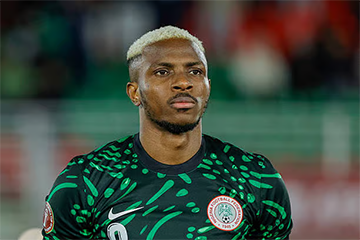
Nigeria striker Victor Osimhen has moved to clarify the circumstances surrounding his absence from the Super Eagles’ forthcoming international friendly matches against Poland and Portugal, insisting that recent comments by head coach Eric Chelle were misunderstood.
The Galatasaray forward will not be part of Nigeria’s squad for the two high-profile friendlies this month, a development that sparked speculation after Chelle suggested that the striker was focused on resolving issues relating to a possible transfer.
While explaining the absence of key players from his squad, Chelle remarked that Osimhen could be on the verge of changing clubs, prompting widespread reports linking the Nigerian star to a move away from Turkish champions Galatasaray.
“We miss two players because Victor Osimhen may be about to change clubs,” Chelle had said.
The comments fuelled fresh speculation about the future of the 27-year-old striker, who has been linked with several top European clubs following another prolific season in Turkey.
However, Osimhen has now sought to calm the situation, revealing that he personally contacted the Super Eagles coach to discuss the remarks and clear up any misunderstanding.
In a statement posted on his Instagram Story, the Nigerian international stressed that Chelle’s comments had been taken out of context and did not reflect any intention to create controversy surrounding either his future or Galatasaray.
“I just got off the phone with Coach Eric Chelle regarding the comments about me in his recent interview,” Osimhen wrote.
“Unfortunately, his words have been taken out of context and blown out of proportion. He has great respect for Galatasaray, follows most of our games, and never intended to create any controversy.
“I appreciate the conversation, the opportunity to always represent my country, and I look forward to continuing to work with him. He is a great coach whom I respect a lot, and I kindly ask everyone to disregard the speculation surrounding this matter.”
Osimhen’s statement effectively confirms that his absence from the friendlies against Poland and Portugal should not be interpreted as a sign of tension with the national team setup. Rather, it appears to be a mutually understood arrangement as the striker manages personal and professional commitments during the transfer window.
The former Napoli star remains a central figure in Chelle’s plans as Nigeria continues preparations for the 2026 FIFA World Cup qualifying campaign and the 2027 Africa Cup of Nations.
For now, the Super Eagles will take on Poland and Portugal without their leading marksman. Still, Osimhen has reaffirmed both his commitment to Nigeria and his strong working relationship with the national team coach.
JOIN THE SPORTS VILLAGE SQUARE CHANNEL ON WHATSAPP:
https://www.whatsapp.com/channel/0029Vaz7mEIGk1FxU8YIXb0H

Nigeria’s leading football investor and proprietor of Remo Stars Football Club and Beyond Limits Football Club, Hon. Kunle Soname, has redeemed his promise to reward the Flamingos after the team’s six-goal demolition of Guinea in their FIFA U-17 Women’s World Cup qualifier.
Soname had pledged a bonus of N750,000 for every goal scored by the Nigerian girls during the return leg of the second-round qualifier at the Remo Stars Stadium in Ikenne.
Following the Flamingos’ emphatic 6-0 victory, the businessman fulfilled his commitment by rewarding the team with a total sum of N4.5 million.
The gesture came after the Flamingos produced another outstanding display to complete an 11-0 aggregate victory over Guinea and advance to the final qualification round for the 2026 FIFA U-17 Women’s World Cup in Morocco.
The young Nigerians entertained the home crowd with goals from Oluwakemi Adegbuyi, who scored twice, captain Harmony Chidi, who also bagged a brace, Queen Joseph, and substitute Precious Oscar.
Soname’s reward was widely applauded by football stakeholders, who viewed it as a significant morale booster for the team ahead of the decisive final-round clash against the Benin Republic.
Over the years, the Remo Stars owner has built a reputation as one of Nigeria’s foremost sports investors through his sustained support for football development, youth programmes and grassroots initiatives.
His latest gesture further highlights the growing role of private sector involvement in Nigerian football and the importance of incentivising young athletes as they strive for international success.
The Flamingos will now shift their focus to the final qualification hurdle against Benin Republic, knowing that victory will secure another appearance at the FIFA U-17 Women’s World Cup.
With confidence high and financial encouragement coming from prominent supporters such as Soname, the young Nigerian side will be hoping to continue their impressive march towards Morocco 2026.
JOIN THE SPORTS VILLAGE SQUARE CHANNEL ON WHATSAPP:
https://www.whatsapp.com/channel/0029Vaz7mEIGk1FxU8YIXb0H
By Kunle Solaja.
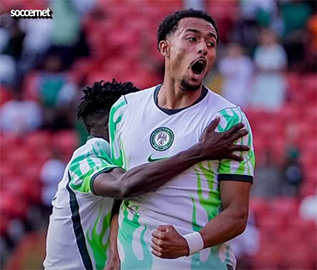
Femi Azeez etched his name into Nigerian football history on Tuesday after becoming the 62nd player to score on debut for Nigeria.
The forward achieved the feat during Nigeria’s Unity Cup clash against the Zimbabwe national football team at The Valley, home ground of Charlton Athletic F.C.
Azeez opened the scoring in the sixth minute to hand the Super Eagles an early lead before adding a second goal in the 63rd minute to cap a dream debut and secure his place in the long list of Nigerian debut scorers dating back to 1949.
By scoring twice on his debut, Azeez also became the first Nigerian player in 55 years to net a brace in his maiden appearance for the national team. The last player to achieve the feat was Mathias Obianika, who scored twice in Nigeria’s 4-0 defeat of the then Upper Volta, now Burkina Faso, in November 1971.
Sports Village Square recalls that only five Nigerian players have scored two goals on debut for the Super Eagles. The list began with Friday Okoh, who scored twice in Nigeria’s 5-0 victory over the then Gold Coast on October 20, 1951. Patrick Noquapor followed with a brace in Nigeria’s 3-3 draw against Ghana on October 27, 1957, while Abudu Buraimoh achieved the feat in a 3-2 victory over Ghana on October 25, 1958, before Obianika’s memorable double in 1971.
The Unity Cup once again lived up to its reputation as a platform for emerging talents in the Super Eagles, with no fewer than four players making their senior national team debuts. Among them were Rangers International F.C. duo Chibueze Oputa and Kenneth Igboke.
By scoring on his first appearance, Azeez joined an elite list that began with Balogun Tesilimi, who scored on debut against Sierra Leone in Freetown on October 8, 1949.
Other prominent Nigerian players who scored on debut include Finidi George, Julius Aghahowa, Obafemi Martins, Joseph Aribo and Bryan Idowu.
Azeez also became the first Nigerian player to score on debut since Jerome Akor Adams achieved the feat against the Lesotho national football team in October 2025.
The achievement further highlights the youngster’s attacking promise and adds another memorable chapter to Nigeria’s rich football history.
OTHER NIGERIA’S SCORING DEBUTANTS SINCE 1949
Player Match Date Venue Country 1 Balogun Tesilimi Sierra Leone 0-2 Nigeria October 8, 1949 Freetown Sierra Leone 2 Okoh Friday – 2 goals Nigeria 5-0 Gold Coast (Ghana) October 20, 1951 Lagos Nigeria 3 Asoluka Cyril Nigeria 5-0 Gold Coast (Ghana) October 20, 1951 Lagos Nigeria 4 Anieke Peter Nigeria 5-0 Gold Coast (Ghana) October 20, 1951 Lagos Nigeria 5 Okere Titus Nigeria 5-0 Gold Coast (Ghana) October 20, 1951 Lagos Nigeria 6. Okwudili Daniel Nigeria 3-0 Gold Coast October 27, 1956 Lagos Nigeria 7 Longe Julius Nigeria 3-0 Gold Coast October 27, 1956 Lagos Nigeria 8 Ejor Hubert Nigeria 3-0 Gold Coast October 27, 1956 Lagos Nigeria 9. Noquapor Patrick 2 goals Ghana 3-3 Nigeria October 27, 1957 Accra Ghana 10. Ijeoma Patrick Ghana 3-3 Nigeria October 27, 1957 Accra Ghana 11 Buraimoh Abudu – 2 Goals Nigeria 3-2 Ghana October 25, 1958 Lagos Nigeria 12 Onyali Elkana Nigeria 3-1 Ghana October 10, 1959 Lagos Nigeria 13. Ohiri Christopher Nigeria 3-1 Ghana October 10, 1959 Lagos Nigeria 14. Chukwumah Egwuonu Tunisia 2-2 Nigeria December 10, 1961 Tunis Tunisia 15 Egbuonu Johnny Cameroon 1-2 Nigeria January 1 1963 Yaoundé Cameroon 16 Uduemezie Chris Cameroon 1-2 Nigeria January 1 1963 Yaoundé Cameroon 17 Olatunji Lasisi Nigeria 2-2 Guinea July 27, 1963 Lagos Nigeria 18 Anieke Sunday Gabon 2-2 Nigeria August 28, 1965 Libreville Gabon 19. Mordi Bobo Gabon 2-2 Nigeria August 28, 1965 Libreville Gabon 20. Olowo-Oshodi Samsideen Nigeria 3-2 Congo DR November 5, 1966 Lagos Nigeria 21 Aghoghovbia Joe Nigeria 1-1 Cameroon December 7, 1968 Lagos Nigeria 22 Obianika Mathias – 2 Goals Nigeria 4-0 Upper Volta (Burkina Faso) November 27, 1971 Lagos Nigeria 23 Oyarekhua Sunny Nigeria 4-0 Upper Volta (Burkina Faso) November 27, 1971 Lagos Nigeria 24 Popoola Ben Nigeria 2-0 Côte d’Ivoire July 18, 1974 Lagos Nigeria 25. Ibeabuchi Ogidi Ghana 1-2 Nigeria August 21, 1974 Accra Ghana 26. Usiyen Thompson Kenya 1-1 Nigeria February 7, 1976 Nairobi Kenya 27. Godwin Iwelumo Nigeria 7-0 Benin February 14, 1977 Lagos Nigeria 28. Onwuachi Martins Benin 1-1 Nigeria October 14, 1978 Cotonou Benin 29. Boateng Leotis Nigeria 2-0 Tunisia July 12, 1980 Lagos Nigeria 30. Emmanuel Osigwe Nigeria 2-0 Tunisia July 12, 1980 Lagos Nigeria 31. Nwokocha Chris v Tanzania 0-2 Nigeria December 20, 1980 Dar-es-Salam Tanzania 32 Ali Bala Nigeria 1-0 Upper Volta (Burkina Faso) July 18, 1981 Lagos Nigeria 33 Adeshina Ademola Ethiopia 0-3 Nigeria March 7, 1982 Benghazi Libya 34 Omughele John v. Ghana Ghana 1-2 Nigeria October 30, 1983 Accra Ghana 35 Sadi Dahiru Nigeria 3-1 Kenya April 20, 1985 Lagos Nigeria 36. Balaraba Abubakar Guinea 1-1Nigeria April 9, 1989 Conakry Guinea 37 Adekola Adeolu v. Nigeria 3-0 Guinea April 22, 1989 Ibadan Nigeria 38 Oyekanmi Taju Nigeria 2-0 Cote d’Ivoire January 25, 1990 Kaduna Nigeria 39 Okechukwu Uche Nigeria 2-0 Côte d’Ivoire January 25, 1990 Kaduna Nigeria 40 Lawal Dimeji Nigeria 3-0 Togo August 18, 1990 Lagos Nigeria 41 Finidi George Nigeria 7-1 Burkina Faso Faso July 27, 1991 Lagos Nigeria 42. Taiwo Wasiu USA 3-2 Nigeria June 11, 1995 Boston USA 43. Fatusi Tesilimi Czech 2-1 Nigeria Dec, 11, 1996 Casablanca Morocco 44. Zeigbo Kenneth Cameroon 0-1 Nigeria August 7, 1997 Tunis Tunisia 45 Garba Ahmed Iran 0-1 Nigeria January 28, 1998 Hong Kong Hong Kong, China 46. Aghahowa, Julius Nigeria 2-0 Morocco February 3, 2000 Lagos Nigeria 47. Ishola Shuaibu Nigeria 3-2 Malawi June 4, 2000 Kano Nigeria 48. Agali Victor Nigeria 1-0 Zambia January 13, 2001 Lagos Nigeria 49. Opabunmi Femi Nigeria 3-0 Kenya May 4, 2002 Lagos Nigeria 50 Ogochukwu Ileagwu Senegal 2-2 Nigeria October 12, 2002 Dakar Senegal 51. Ogechukwu Uche Ghana 0-1 Nigeria December 15, 2002 Accra Ghana 52. Akwueme Emeka Nigeria 2-0 Jordan April 28, 2004 Lagos Nigeria 53. Martins Obafemi Ireland 0-3 Nigeria May 29, 2004 London Britain 54 Makinwa Ayodele South Africa 2-1 Nigeria Nov. 17, 2004 Johannesburg South Africa 55 Akabueze Chukwuma v. Kenya Kenya 0-1 Nigeria May 27, 2007 Nairobi Kenya 56. Peter Utaka v. Congo DR Nigeria 5-2 DR Congo March 3, 2010 Abuja Nigeria 57 Osas Idehen Nigeria 5-2 DR Congo March 3, 2010 Abuja Nigeria 58 Ehiosun Ekigho Nigeria 2-1 Sierra Leone February 9, 2011 Lagos Nigeria 59. Bryan Idowu. Argentina 2-4 Nigeria November 14, 2017 Krasnodar Russia 60 Joseph Aribo v. Ukraine Ukraine 2-2 Nigeria September 10, 2019 Dnipro Ukraine 61 Akor Jerome Adams Lesotho 1-2 Nigeria October 10, 2025 Polokwane South Africa
62 Femi Azeez Nigeria 1-0 Zimbabwe May 26, 2025 London
JOIN THE SPORTS VILLAGE SQUARE CHANNEL:


Côte d’Ivoire End Ecuador’s Record Unbeaten Run

Amad’s Late Strike Gives Côte d’Ivoire Dramatic Victory Over Ecuador

Iran Arrive in Los Angeles for Historic and Highly Charged World Cup Opener
Breaking! Uzoho suspended from Super Eagles’ next match with Sierra Leone
No longer Super League as CAF changes name of its new clubs competition
NIGERIAN FOOTBALL CHIEF EXECUTIVE, SANUSI CHARGES NIGERIAN COACHES TO BE UPRIGHT, DILIGENT
-

 International Football1 week ago
Eriksen Suffers Fresh Collapse During Denmark Friendly, Reviving Memories of Euro 2020 Ordeal
-

 World Cup1 week ago
Pelé’s 1970 World Cup Hideaway Becomes Tourist Attraction as Mexico Hosts Tournament for Record Third Time
-

 Uncategorized1 week ago
Iran World Cup squad still in visa limbo 10 days before first match, ambassador says
-

 World Cup1 week ago
Strike Threat Looms Over USA-Paraguay World Cup Match at SoFi Stadium
-

 World Cup1 week ago
Iran’s World Cup team arrive in Tijuana with US tensions high
-

 International Football7 days ago
Iwobi Salutes Nigerians Ahead of Landmark 100th Super Eagles Appearance
-

 World Cup1 week ago
Nine injured in shooting near England’s World Cup base camp
-

 World Cup1 week ago
Iran World Cup players granted visas to enter the US, says White House official